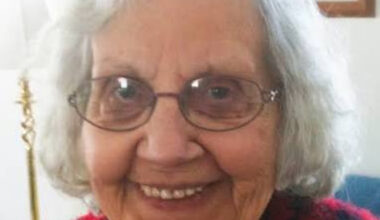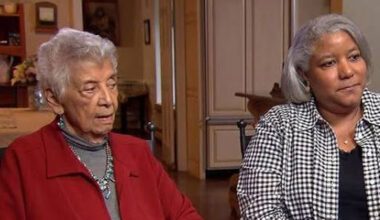
Basic Information
| Item | Details |
|---|---|
| Full name | Allie M. Smith, often identified in public records as Frances Allethea Murray Smith |
| Birth date | December 24, 1905 |
| Birthplace | Near Plains, Georgia, United States |
| Death date | April 1, 2000 |
| Parents | John William “Captain” Murray and Rosa Nettie Wise Murray |
| Spouse | Wilburn Edgar Smith |
| Children | Rosalynn Carter, William Jerrold Smith, Murray Lee Smith, Lillian Allethea Smith Wall |
| Known for | Mother of Rosalynn Carter, long public service life, family leadership, steady work ethic |
| Main occupations | Postal clerk, dressmaker, cafeteria worker, grocery worker, seamstress |
| Notable recognition | Georgia College Alumni Mother of the Year, Georgia Women of Achievement Hall of Fame |
A Life Rooted in Plains
Allie M. Smith’s life flows like a river beneath a calm meadow. She was created for endurance, not beauty. She was born December 24, 1905, near Plains, Georgia, into a close family that valued work, discipline, and practical love. Her parents, John William “Captain” Murray and Rosa Nettie Wise Murray, gave her a foundation that builds history, not headlines.
Her life was shaped by her Plains childhood. After graduating from Plains High School in 1924, she graduated from Georgia State College for Women in 1926. Her priorities were education and responsibility. She became an adult when women were expected to carry heavy loads without praise. She gracefully carried them.
Marriage, Loss, and the Work of Holding a Family Together
In June 1926, Allie married Wilburn Edgar Smith. Their marriage began in the ordinary way many lasting families begin, with hope, promise, and the expectation of shared years ahead. They had four children together: Rosalynn, William Jerrold, Murray Lee, and Lillian Allethea. Each child became part of a household that was shaped by love, duty, and the constant pressure of making ends meet.
Then tragedy arrived. Wilburn died in 1940, when Allie was still relatively young and her children were still growing up. That loss changed everything. She became the center pole of the family tent, the one who kept the structure standing when the wind came hard. I find that part of her story especially moving. Many people talk about strength as if it is loud. Her strength was not loud. It was the strength of rising early, sewing late, and keeping meals on the table while grief sat in the next room.
After her husband’s death, she took on a wide mix of jobs. She sewed. She worked in a grocery. She worked in a school cafeteria. She made dresses. She spent nearly three decades at the Plains Post Office. That work record says more than any polished speech ever could. It says she was steady, dependable, and determined. It says she understood that family survival often depends on long hours and tired hands.
The Children Who Carried Her Legacy Forward
Allie’s children formed the second great chapter of her life. Each one reflected something of her discipline, patience, and quiet pride.
Rosalynn Carter was the eldest and became the most publicly visible. She would later serve as First Lady of Georgia and First Lady of the United States. But before the world knew her in that role, she was Allie’s daughter, growing up in a household where example mattered more than lectures. After Wilburn’s death, Rosalynn helped shoulder family duties. That kind of shared work can leave a lasting imprint. I think of it as a workshop of character, where each chore was also a lesson in loyalty.
William Jerrold Smith, often called Jerry, built a life in engineering and eventually worked in Indiana. Murray Lee Smith became a math teacher and coach, which fits a family story built on structure, discipline, and encouragement. Lillian Allethea Smith Wall worked in banking in Americus and Atlanta, carrying the family name into another sphere of responsibility and trust. These were different paths, but they all seem to radiate from the same center.
What stands out to me is not just that Allie raised children. It is that she raised adults. She helped produce people who could function in public life, professional life, and family life. That is not a small achievement. It is a cathedral built one brick at a time.
A Mother, a Worker, and a Community Figure
Allie’s later years brought wider recognition, but her character never changed shape. She was honored as Georgia College Alumni Mother of the Year in 1978, and she appeared on television that same year. She also traveled through civic and cultural programs that took her beyond Georgia and beyond the ordinary expectations attached to a woman of her generation.
Still, even when the world noticed her, she remained most fully herself in the details. She was the woman who worked a postal shift, who kept sewing, who kept her family’s center of gravity steady. In that way, she reminds me of a lighthouse. A lighthouse does not chase ships. It simply stands, and because it stands, others can find their way.
Her home life also connected her to a remarkable line of descendants. Through Rosalynn and Jimmy Carter, she became the grandmother of Jack Carter, Chip Carter, Jeff Carter, and Amy Carter. Through later generations, her family line expanded further, carrying her name and influence into new branches. Those descendants are not just names in a list. They are evidence that one woman’s endurance can echo across decades.
The Family Members Around Her
The picture brightens when I plot the family around Allie M. Smith.
The foundation, her parents John William “Captain” Murray and Rosa Nettie Wise Murray, are older. Her husband, Wilburn Edgar Smith, was her first adult companion, and his death made her life harder. Her children Rosalynn, Jerry, Murray, and Lillian continued her story. Jack, Chip, Jeff, and Amy, her grandchildren, made the family famous. Later generations like Jason Carter, Margaret Alicia Carter, Hugo James Wentzel, and Errol Carter Kelly demonstrate how far a deep-rooted family may go.
I regard this family as more than names. I perceive a living chain. Every link counts. The previous generation influences the next. Allie was a hidden link that secured everything.
Why Her Story Still Matters
Allie M. Smith matters because she represents a kind of American life that is easy to overlook and impossible to replace. She was not a celebrity in the usual sense. She did not build a public brand. She did not cultivate fame. She built something harder. She built a family, a reputation, and a legacy of steadiness.
Her life also reminds me that greatness does not always arrive with fanfare. Sometimes it arrives with a work apron, a postal route, a sewing needle, and a child watching closely from the kitchen doorway. She lived through loss, labor, and public attention, yet she remained anchored in duty. That kind of character is rare. It shines without demanding a stage.
FAQ
Who was Allie M. Smith?
Allie M. Smith was a Georgia woman best known as the mother of Rosalynn Carter. She was born in 1905, worked many jobs to support her family after her husband’s death, and became known for her strength, education, and devotion to family.
Who were Allie M. Smith’s family members?
Her parents were John William “Captain” Murray and Rosa Nettie Wise Murray. Her husband was Wilburn Edgar Smith. Her children were Rosalynn Carter, William Jerrold Smith, Murray Lee Smith, and Lillian Allethea Smith Wall. Her grandchildren included Jack Carter, Chip Carter, Jeff Carter, and Amy Carter.
What kind of work did Allie M. Smith do?
She worked as a dressmaker, postal clerk, cafeteria worker, grocery worker, and seamstress. She spent about 29 years at the Plains Post Office and also helped support her family through other kinds of work.
Why is Allie M. Smith remembered today?
She is remembered for her role as a strong mother, her long work life, her influence on Rosalynn Carter, and her example of quiet resilience. Her story continues to matter because it shows how ordinary labor can create an extraordinary legacy.
Did Allie M. Smith have public recognition?
Yes. She was honored as Georgia College Alumni Mother of the Year in 1978 and was later recognized by Georgia Women of Achievement for her life and influence.
What makes her story unique?
Her story is unique because it combines family sacrifice, lifelong labor, education, and public influence without relying on fame. She lived with humility, yet the reach of her life extended far beyond Plains, Georgia.